
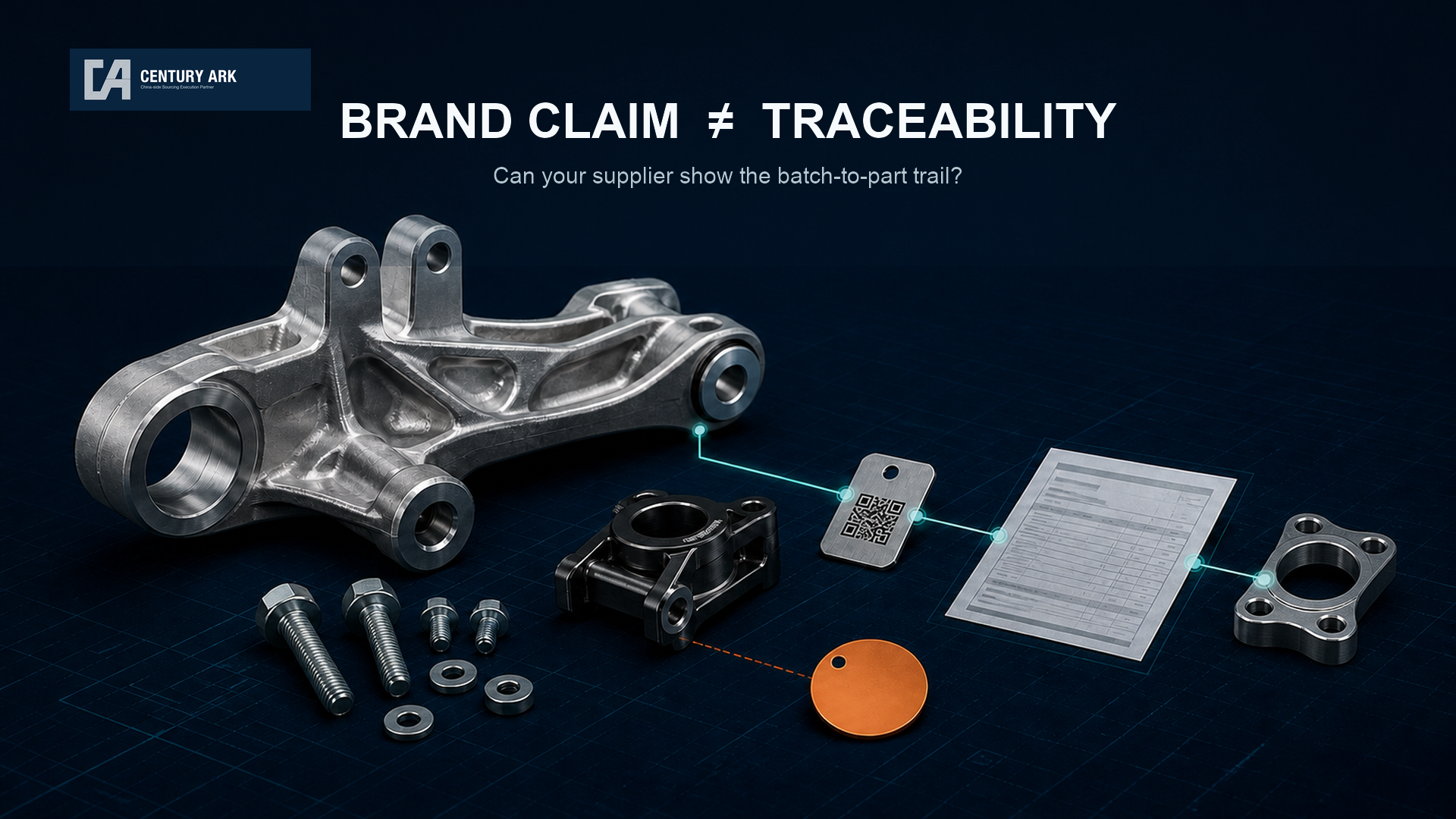
Decision lens
Before production begins, establish whether the material supplier can provide the order-to-batch evidence path the importer may need before cargo release.
From 5 to 7 August 2026, I attended APES 2026 Shanghai International Auto Parts Expo at the National Exhibition and Convention Center in Shanghai. I spoke with several manufacturers of lightweight fasteners, aluminum vehicle components and off-road accessories about raw-material sourcing.
I expected material sourcing to be a sensitive topic. The answers were often similar: “We use tier-one brands.”
That statement does not mean a factory is using unsuitable material. It also does not prove that any particular supplier lacks a good upstream source. But it exposed a purchasing gap that matters to U.S. buyers of China-made aluminum parts.
A material brand is a purchasing preference. It is not, by itself, a material traceability record.
For aluminum articles that fall within the U.S. Aluminum Import Monitoring and Analysis (AIM) system, the import file may require more than a China country-of-origin statement. The relevant data fields distinguish, among other things, country of origin, country of largest smelt and country of most recent cast. Whether a specific part is covered still depends on its HTS classification and import arrangement. But when such information is needed, it is usually created upstream of the finished-parts factory.
That changes the buyer’s question. It is not only: “Which aluminum brand do you use?” It is: “Can this order show where the material record starts, how it reaches the finished part, and who owns the evidence before cargo is released?”
Point 1: A Brand Name Is Not an Order Record
“Tier-one aluminum” may mean that a factory prefers to buy from established mills or profile suppliers. That can be commercially meaningful. It does not, however, identify the material manufacturer for this order, the product form used, the relevant material lot, or the documents that connect that material to the finished components.
An alloy designation does not close that gap either. A drawing may specify 6061-T6, 6063, ADC12 or another alloy. The specification tells the supplier what the part is expected to be made from. It does not automatically show which billet, extrusion profile, casting feedstock or material certificate was used for the actual production batch.
This is where buyers can make an understandable but costly assumption: that alloy grade plus a familiar supplier name equals traceability. It does not. The first describes a technical requirement. The second describes a sourcing preference. Neither creates a controlled link between the upstream material and the shipment about to leave China.
Check 1: Can the supplier identify the material product form, actual source and batch or certificate reference that apply to this order—not only the alloy grade and a preferred brand?
Point 2: The Finished-Parts Factory May Not Hold the Metal History
An aluminum roof-rack support, side-step bracket or lamp housing may pass through several parties before it becomes a finished component: a billet or ingot source, a profile, sheet or casting-material supplier, an initial processor, a surface-treatment subcontractor and a final assembly factory.
The factory that ships the finished part often understands the last manufacturing step best. It may not be the original holder of every upstream material record.
That matters because country of origin, country of largest smelt and country of most recent cast answer different questions. Under AIM, country of origin concerns where the covered aluminum product was manufactured; country of largest smelt concerns where the largest volume of primary aluminum used in the product was produced; country of most recent cast concerns where the aluminum was last melted and cast into a solid state.
Consider a simplified order. A U.S. off-road brand buys aluminum roof-rack supports from a China factory. The quotation names a suitable alloy and says the factory uses a tier-one profile supplier. The samples fit. Production passes inspection. When the cargo is ready, the buyer’s import team asks what data can support the entry for the actual product.
The factory can confirm that it produced the supports in China. It can also name the profile supplier. But it cannot immediately link the order to the upstream material records needed for the applicable import file. The relevant information was never made a controlled requirement at the time the profile was purchased.
This does not automatically mean the material or shipment is non-compliant. It means the buyer may be trying to reconstruct an evidence chain after the product, booking and delivery schedule have already become critical.
Check 2: If the U.S. import route requires material-origin information, which party can provide each field, and how will that information be linked to the finished-part order and batch?
Point 3: Treat the Evidence Path as Part of the PO
The practical response is not to ask every China factory to make a U.S. customs determination. The importer and its broker should determine whether the specific product is within scope and what entry information is required.
But once the requirement is known, the China-side order needs an execution plan. Otherwise, the factory may be asked to provide information it never obtained from the extrusion, casting-material or other upstream supplier.
For a relevant aluminum order, buyers should settle four points before production begins.
Check 3: Who confirms the product’s import scope and required data fields with the importer and broker before the PO is released?
Check 4: What evidence must be retained from the material supplier—such as material source, product form, lot or certificate reference, and, where relevant, origin, smelt and cast information?
Check 5: Which changes require advance notice and re-approval? A change in material supplier, profile source, casting feedstock, material lot, external process or final factory may not always change the drawing. It can still change the evidence path behind the order.
Check 6: Who holds the final order-to-material mapping, and can the importer or its designated team review it before cargo release?
The most useful sourcing question is not, “Can this factory make an aluminum part?”
It is: “Can this order explain the material history behind that part when the import file needs it?”
For U.S. buyers of China-made aluminum vehicle and outdoor components, that question should be settled at the PO stage. A generic “tier-one aluminum” statement may be a reasonable start to a supplier conversation. It is not the end of a controlled material record.
This article is a general China-side supply-chain execution perspective, not customs, tariff, legal or product-compliance advice. The import treatment of a specific part depends on its HTS classification, transaction structure, applicable rules and the assessment of the importer and its customs adviser.
Need a clearer material-evidence path before production begins?
Start with the product, material record, and release decision that need to be made clear.
Request a review